Tokens, stablecoins and the Token transfers tab
Most crypto transfers today are not "network coins" but tokens: USDT, USDC, DAI. They live by their own rules, and it's precisely in them that activity hides — activity you can easily miss if you only look at the Transactions tab.
1. What a token is and how it differs from a coin
A network coin (ETH, BNB, TRX) is the blockchain's "native" currency, the one you pay fees with. A token is a record in a separate smart contract, living "on top of" the network. USDT on Ethereum is a balance in the Tether contract, not ether. The standard for such tokens on EVM is ERC-20.
- Stablecoins (USDT, USDC, DAI)Pegged to the dollar. The main instrument of P2P, of exchange, and, unfortunately, of cash-out schemes. USDT-TRC20 on the TRON network is the absolute leader by volume.
- Utility tokens and memecoinsFrom serious projects to outright scams. Memecoin scams are especially widespread on Solana.
- NFTsUnique tokens; used in wash-trading schemes (laundering through inflated deals).
2. Why Value = 0 ETH for token transfers
When you send USDT, the "native" coin (ETH) does not move — you only pay a fee with it. So in such a transaction the Value field is always 0 ETH, while the real amount is visible in a separate Tokens transferred section. Recall the benchmark transfer from the previous lesson:
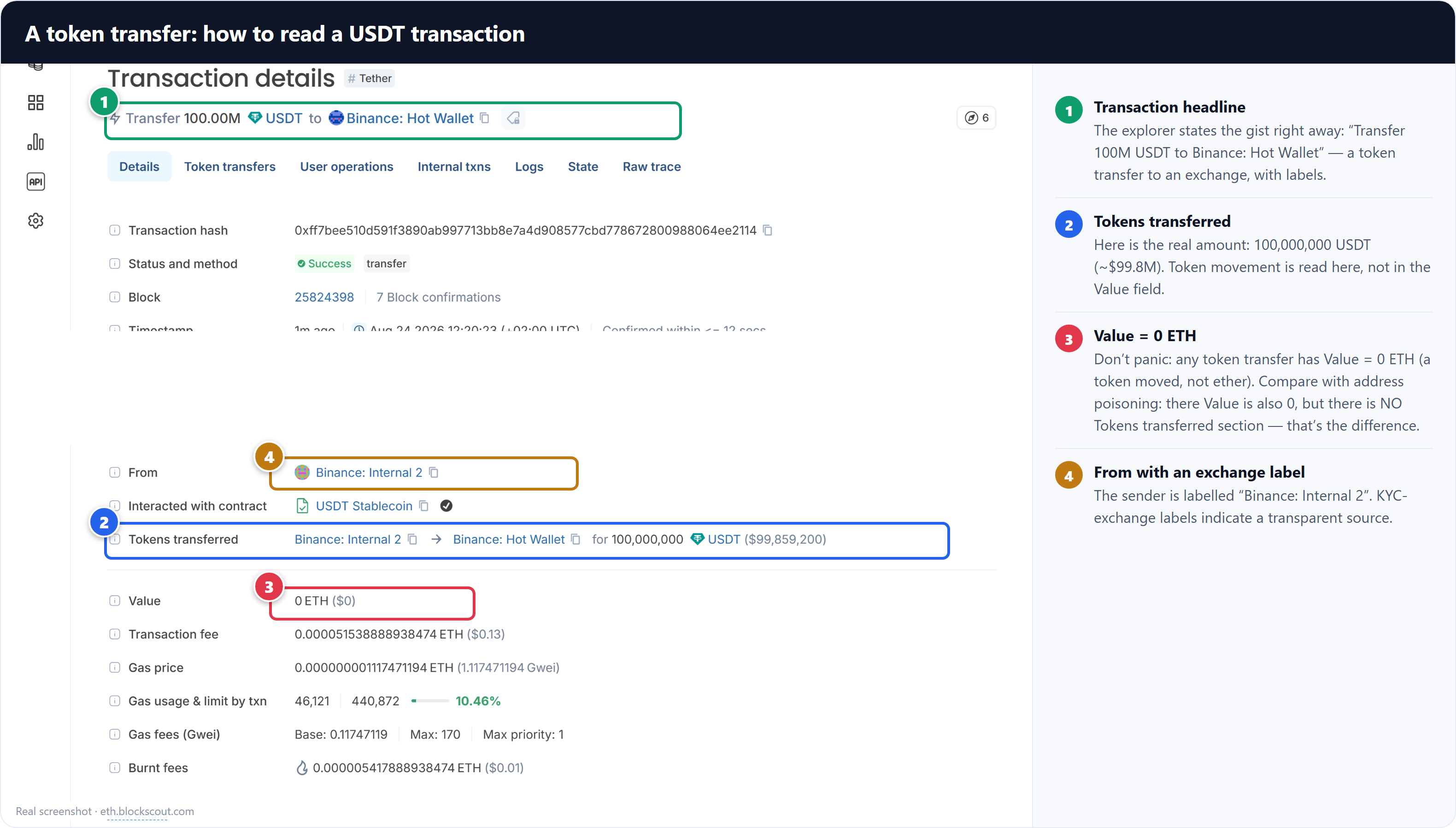
Value = 0 ETH, but Tokens transferred shows 100,000,000 USDT.
3. The Token transfers tab on an address page
On a wallet page, a separate Token transfers tab shows all token movements — the very thing that isn't in the Transactions tab.
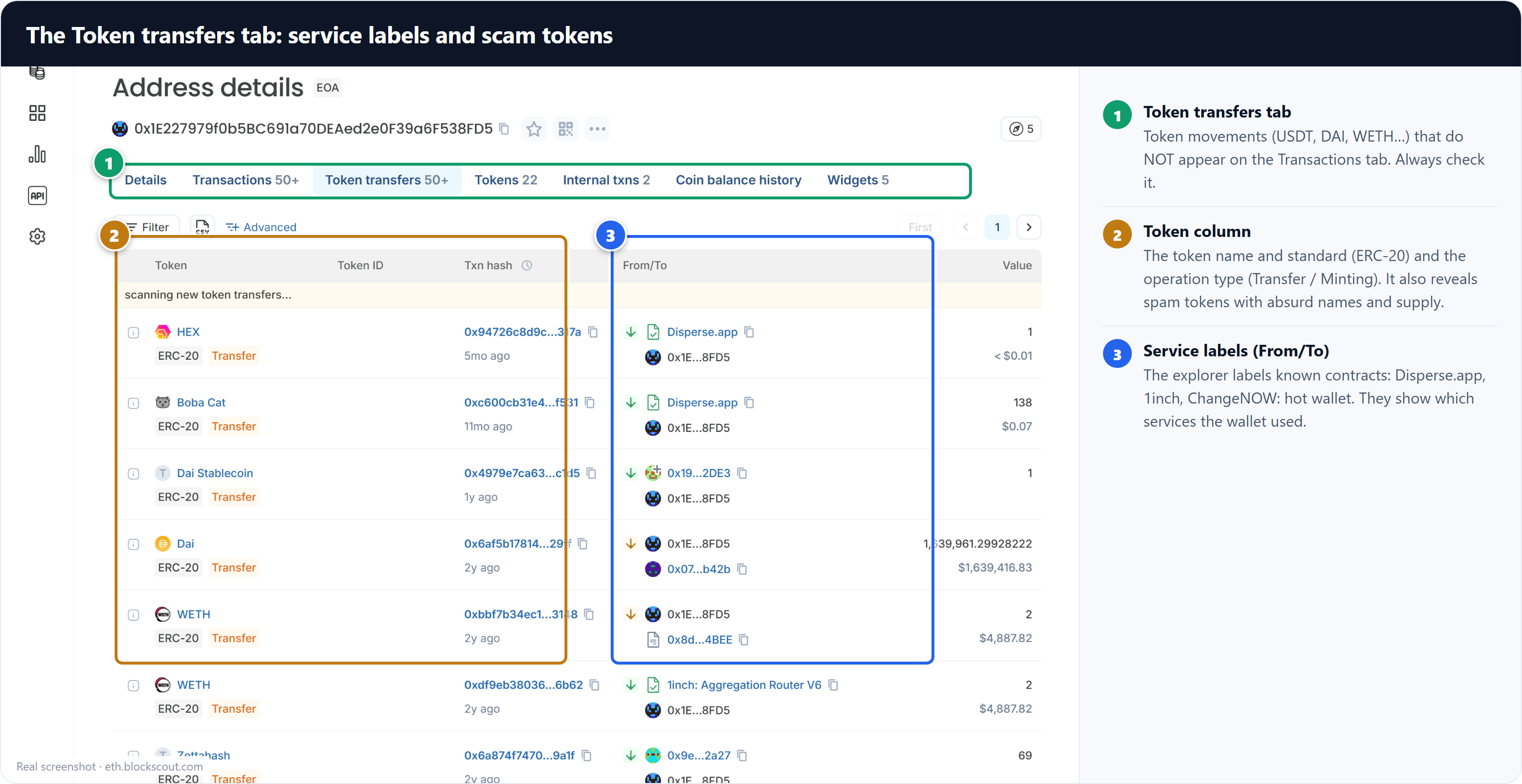
Service labels and scam tokens on a real page.
- The Token columnThe name and standard (ERC-20), and the operation type (Transfer / Minting). Here you also see spam tokens with absurd names.
- Service labelsThe explorer labels known contracts: Disperse.app, 1inch, ChangeNOW: hot wallet. From these you can see which services the wallet has worked with.
- Scam tokens and "dust"Tokens issued in the billions and marked Minting are spam that fraudsters blast out to thousands of addresses. Their presence does NOT make a wallet dirty, but you have to learn to tell them apart (in detail — Section 7).
4. Stablecoins can be frozen
USDT and USDC are centralised tokens. Their issuers (Tether and Circle) can put an address on the contract blacklist, and the tokens on it will stop moving forever. This is usually done at the request of law enforcement. You can check whether an address is frozen right on the blockchain (Section 8).
Summary of the lesson and the section
- A token (ERC-20) lives on top of the network; stablecoins are the main instrument of transfers and cash-out.
- For token transfers Value = 0 ETH; the real amount is in Tokens transferred.
- The Token transfers tab must be checked — that's where the service labels and scam tokens are.
- USDT/USDC can be frozen — one more reason to check the sender.
All screenshots are real (eth.blockscout.com).